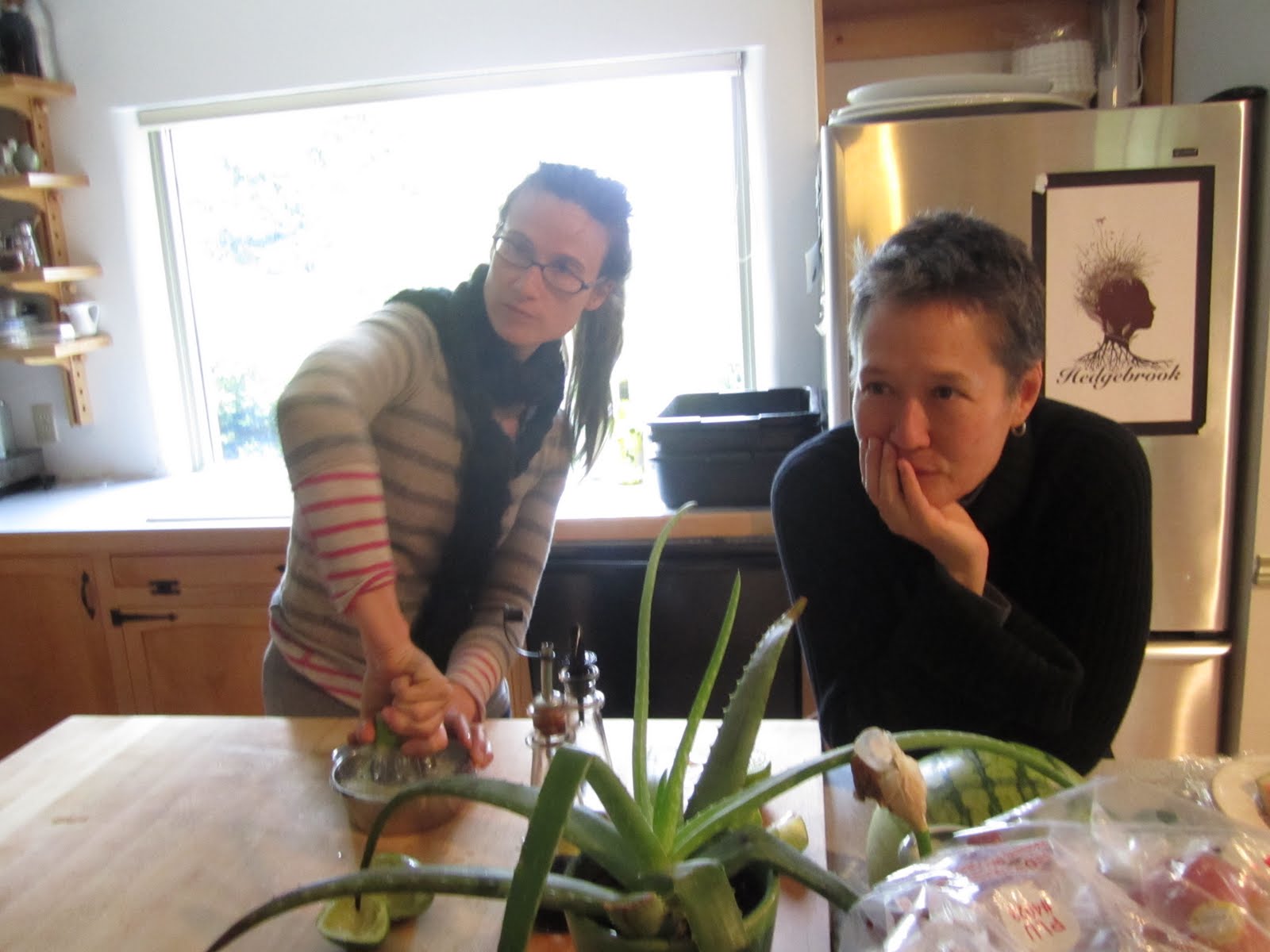
Wednesday, June 29, 2011

When the Big Thing Happens


I thought I’d run a piece I wrote a couple of years ago in honor of my annual exam, this morning (This essay was originally published in MORE magazine). It's about my getting a letter from the breast imaging center. I'm not proud of my reaction, but I learned a lot:

I’ve been fearful all my life.  I black out when I give blood.  I can’t walk to the top of the Guggenheim without hugging the inner walls.  It takes two valiums to get me to the dentist’s door and a promise of nitrus oxide and gum-numbing gel before I will sit in his chair of pain.  During turbulent plane rides, I’ve been known to scream, “HOLY CRAP, WE’RE ALL GOING TO DIE.”
I’ve been fearful all my life.
But I’ve always known that when the chips are down – when the big thing really happens - I will dip into my untapped reserve of spiritual and physical strength and rise triumphant. 
I’ve imagined the scene many times.  The doctor tells me that I have breast cancer.  Tears sting my eyelids, but I stop them from flowing.  I have no time for tears. I must live.  I must fight this thing, if only for my children and my husband who would be lost without me.  I am frightened, yes, but determined.  I will beat this.  I will do the chemo, shave my head, run the marathons.  I will be an inspiration to my friends, solidly upbeat, even funny about my cancer.  They will say, “Who knew that Brett could be so strong, so sure.  We are awed.  We are inspired by her bravery, her generosity, and how good she looks bald.” 
When I saw Melissa Etheridge jam on that guitar at the Grammy’s, with her hairless pate gleaming, I was so pumped I thought, that’s what I want to be -- a rock-n-roll lesbian with stage three breast cancer.           

            My husband, Pat, hands me the letter from Cedar Sinai Imaging Center.  I imagine bad news would come directly from my doctor, so I confidently slide my finger under the flap and rip open the envelope.  I expect this to be a form letter saying that my recent mammogram was clear. 
It is a form letter.  But the news is not what I anticipated.

We are writing to inform you that further information is required regarding your recent mammogram.  Please contact the center to schedule a sonogram. Please note that this request in no way indicates that you have cancer.  Contact your physician for further information.

            Adrenaline shoots through me like a cocked and loaded gun’s being held to my head.  Sweat pours through my skin.  My heart races.  The letter falls to the carpet.  I grab on to the desk and gasp, “I’M GOING TO DIE!”
            Pat grabs onto my shoulders, and yells, “Is it your heart?  Are you having a heart attack?”
            “No,” I pant, the pounding in my head so loud I can barely hear him, “The letter!”
            I point to the letter on the carpet with a shaky finger.
            “Is someone dead?” yells Pat.
            “No,” I yell back.  “The letter!  I’m going to die!”
`            “Someone’s threatening you?” he yells.
            “No,” I scream, my head spinning.  “It’s cancer!”
            “Who has cancer?”
            “The letter.  I have cancer!”
            Nausea churns my stomach.  I’m going to throw up.  I slip to the floor and stretch out on the carpet.  The floor is the safest place to be, as I’m going to pass out, I can feel it. 
            “Where did the letter go?” Asks Pat.
            I feel the crinkling of the paper beneath me, “I think I’m on top of it.”
            “Can you give it to me?”
            “I can’t move.”
            I feel Pat’s hand work it’s way under my back to get the letter.  I hear a rip as he pulls his hand out.  Then I feel his hand return, worming its way under my back again to retrieve the other part of the torn letter. 
            Oh God, I have cancer.  This is the moment you’re afraid of all your life.  The moment when you can see the end.  And that end is close.  It’s very close.  What do I have?  A year maybe? If I’m lucky.  If the cancer hasn’t spread to my lymph nodes and spinal column.  My legs feel numb. That probably means that the cancer has spread to my shins. 
            “It says here ‘in no way indicates that you have cancer’,” says Pat, scanning the two wrinkled halves of the letter. 
            “That’s the way they say it, Pat.  They don’t send out ‘You have cancer’ letters.  They have to introduce the idea gently so you don’t have a heart attack and die on the spot just from reading the letter.”
            “Isn’t it possible that the letter is telling the truth?” Says Pat.  Maybe they didn’t get all the information they needed from the mammogram.”
            Pat is not a person who reads between the lines. He is an empirical thinker.  Only seeing a thing for what it is.  When he looks at a chair, he sees only a chair, not a possible weapon.  This is a maddening quality in a man who is otherwise bright. 
            “Pat. For God’s sake. They don’t send letters asking for further information on nothing.  They only send out letters saying they need further information on your cancer. It’s code for ‘you’re going to die’.”
            Pat exhales. 
            “OK,” he says, “Let’s call Dr. Ricky.  The letter says to call your physician.”
            I roll onto my side and pull my knees up to my chest.  Thank God the children are playing at a friend’s house. I’m going to need time to pull myself together. I have to figure out a way to be brave for them.  I remember that Susan Sarandon did a movie in which played a dying mother of two kids.  She sewed each child a cape that had photographs silk-screened onto the fabric.  I can’t sew a cape. But maybe I can write them each a poem that’s chiseled into a small stone they can keep by their beds. 
            Pat starts to punch numbers into the phone.
            “Wait,” I say. “Don’t call Dr. Ricky.”
            “All right.  Why?
            “I don’t want him to think I’m being hysterical.”
            “You are being hysterical,” he says.
            He hangs up the phone and sits crossed legged next to me, as I breathe deeply for a few seconds. 
            As my breath slows, I think of all the things I will miss.  This carpet I’m lying on, for example. My parents bought it in Turkey and gave it to us for our wedding.  I love this carpet.  I look at the glass globe that we bought in New York a year before Spencer was born.  I think of New York every time I look at it.  The wooden puppet with the broken hand.  Someone gave it to me for Christmas.  Who was that? 
            “You ready?” asks Pat.
            “Um.  Sure.” I say, feeling considerably calmer.
            I pause for a moment to marvel at how simply breathing can soothe the system.  In fact, I feel a tiny bit groggy.  Maybe I should take a nap.  Everything looks better after a nap, even cancer.  My eyelids start to close as I hear Pat punching in the doctor’s number. 
            Pat puts the receiver in my hand.  Now weary, I bring it to my ear.
            “Can I help you?” Asks the receptionist.
            “I hope so,” I say, suppressing a yawn.
            There is a pause while the receptionist waits for more. 
            “I got a letter,” I say.
            “A letter?”
            “Yes,” I say, feeling the wool of the rug on my cheek.
            “What does the letter say?”
            I start to shiver slightly.  Tears spring out of my eyes and trickle onto the rug.  In a small tremulous voice that sounds nothing like my own, I say, “It says I have cancer.”
            The receptionist’s voice is gentle, “We don’t send out letters telling people they have cancer.  Can you read it to me?”
            “Um.  Sure.” I snivel. 
            I take the receiver from my ear and point to the two pieces of the letter Pat still holds.  He hands them to me.
            I try to steady my hands as I move the two pieces together.  I blink several times to clear my eyes and can barely read the phrase, “further information is required regarding your recent mammogram.”
            “Oh,” the receptionist says, “It doesn’t say you have cancer.”
            “But that’s what it means.”
            The receptionist takes a breath, “Look.  Let me assure you.  When you get a letter like that it’s almost always nothing.”
            “Almost always?  But sometimes it is,” I say.
            “Very, very rarely.”
            “But it happens,” I say.
            “Almost never.”
            “Then why do you send out these letters?  They’re very scary.”
            “All the imagists are saying is that they need more information.  It should make you feel good that they’re so thorough.” 
            “What makes me feel good, “ I say, “is not having cancer.”
            “I’m sure they simply couldn’t see everything they needed to see,” she says.
            “Sure,” I say, “because it’s hiding behind a virulent, aggressive tumor.”
            The receptionist pauses, “Do you want to make an appointment with the doctor?”
            I make an appointment for the next day.  But that means I’ve still got to get through the night. 
I speed through the five stages of grief in about half an hour, landing squarely in a sixth stage:  self-pity.  I submerge myself in it like an emotional warm milk bath.  I move around our apartment in a stupor that’s deepened by a couple of glasses of wine.  As I sit at dinner, I gaze at my children chatting happily.  I want to tell them that I won’t always be here.  That I might die sooner than I planned.  That I will miss them terribly.  My eyes hurt.  I want to cry.  I want to demand that we all stop eating dinner – that we all stop pretending that this is just any old day – and let’s all get in bed with mommy and pull up the covers and snuggle her and stay with her the whole time so that night time never comes and sleep never comes and death never ever takes me away from them. 
            I look across the table at Pat who looks back at me with a “Relax-you-don’t-have-cancer” smile.
            I look again at my sons whose confident faces lift me out of my warm pity bath, regardless of my desire to soak myself into prune-like self-absorption. 
I can’t tell them that I might be dying.  In fact, I can’t bring myself to interrupt their conversation with even the most banal of observations.  The young one grabs his cup of juice and drinks.  He’s recently started drinking from a big-boy cup.  I’ve had to remind him daily to sip slowly so he doesn’t spill.  I watch him put the cup back down.  No spill.  These are the things I must be here for.  The little triumphs that make up a life.
            I feel warm and still and almost lightheaded with ridiculous joy.
`            A thought occurs to me.  It is this:  If I have to go through it all, I can. I will. 
            The next day, Dr. Ricky assures me that whatever it is or isn’t can’t be detected manually so I still have to wait a whole month to get the sonogram.  He tells me that the fact that I’m not being bumped to the head of the sonogram line means that the imaging center is confident that this is either no problem at all, or a very small one. This is and isn’t a comfort throughout the month.
            The month is July and we’re all on vacation.  We’re visiting my parents who live on a lake.  I rarely think of shadowy cancer that might be growing its tentacles into my breast tissue – an image that obsessed me the day I got the letter.  My fear has become smaller -- a tugging in the corner of my psyche.  What if?  What if?  What if?  I spend the days splashing around with my sons in the lake and gabbing with my mother in the kitchen. Sometimes, at night, Pat and I make love.  Though I am careful not to touch my own breasts for fear of finding a lump as hard as a marble. 
            And when the month is over; when we go back to Los Angeles and I finally get my sonogram, the nurse tells me what Pat knew all along -- I don’t have cancer. 
When I tell Pat he says, “See I told you it was no big thing.” 
But it will be one day, I think.  One day, the big thing will happen and than you’ll be sorry that you didn’t live in a state of constant readiness. 
I don’t say this, of course, because he’s been complimenting me on how well I’ve been managing my fears for the past month. 
But I haven’t been managing my fears. I’ve simply been managing the rest of it.  This is how I’ve come to find out that when the big thing happens you fall apart and then you get on with it. 
And every smaller thing is a practice run.  

Wednesday, June 22, 2011

The Blessing of a Dead Tree


         The indoor tree next to what could laughingly be called our entertainment center had been in critical condition for at least a year.  I bought it when we moved into our apartment six years ago. The job of the tree was to fill in the hole between our living room wall and the…um…cupboard that housed our TV and some stretchy exercise straps that we were supposed to use while watching Olberman, but never did. Without the tree, we’d be staring at the scraggly bunch of wires and boxes that made our TV go. The leafy tree was a decorative solution that Pat found unnecessary. What was wrong with seeing a few wires, he argued? He also dredged up my sketchy history with plants, including the demise of window boxes full of impatiens that dried up like raisins in the sun. 
The root of our disagreement about the tree was not the wires or my negligent past, however, it was money. It’s always money. Pat will always be on the side of not spending a dime on anything ever, even if it means living with a car that needs to be filled with a gallon of water before turning it on, a mattress whose spring will stab you every time you roll too far to the left, and a drawer full of jockey shorts that are more vapor than substance,
            When the two arms of Pat’s glasses fell off a couple of years ago, he attached string to the specs with electrical tape and tied them around his head. He was so pleased with his absolutely free solution that he wore them like that for over a year and was delighted to show anyone his handy work whenever they asked about them. Which they did frequently.
            I bought the tree without asking Pat what he thought about the expenditure. This is how our domestic politics work around purchasing. I agree to live in an apartment that looks like it’s inhabited by inventive orphan boys on a deserted island and whenever I decide that amenities like dinner plates need to be purchased, I buy them without discussion. They simply appear and are grudgingly accepted by the orphans who would rather eat off of repurposed vinyl albums from the basement.
            What made the tree unique in the purchasing history of our household was that it didn’t simply materialize. It was too big for me to move by myself. This meant that Pat had to acknowledge the existence of the tree when he helped move it into the apartment, and this felt like acquiescence to Pat.  As a consequence, he always hated the tree.
            To the tree’s credit, it struggled for life mightily in the dark hole, unloved by the father of the house and frequently neglected by the mother. Its leaves turned brown and fell off, to be then swatted around by the cat. Several leaves broke off even when they were green, bashed by the door of the TV cupboard.
            Had the tree been a child, Pat and I would be serving time right now. I will spare readers more graphic details of the slow murder of this living thing and skip to last week, when I heard a death rattle near the television and discovered the tree listing at a 45 degree angle, completely brown, a small scrap of paper crumpled beside it. What I feared was a suicide note turned out to be an IOU to Murphy for two dollars I purloined from his piggy bank recently.
            “Well, you got your wish,” I announced to Pat that evening. “The tree has finally died.”
            “I never wished for its death,” Pat said. “I only wished that we hadn’t bought it in the first place.”
            “Hairsplitting, “ I said. “Can you throw it out tomorrow? It looks awful and I’m afraid it’s going to fall on one of the children.”
            Pat shrugged in what looked like the affirmative. The next evening, however, the dead tree was still leaning into the living room.
            “Can you move the tree tomorrow?” I asked Pat.
            “I’ve got a busy day,” he said. “I’ll get to it as soon as I can. But, to be honest, moving the tree is not a high priority.”
            “I’ll say,” I said.
            “What’s that supposed to mean?”
            “You never liked the tree,” I muttered. Pat shrugged.
            The next afternoon, the boys and I returned home to find the tree leaning over even further. It was as if its ghost was insisting on the attention it never got in life. Pat was out with some buddies so I was stuck with the damn thing for another whole night.  I seethed with rage and remorse.  After putting the boys to bed, I sat on the couch glaring at the formerly living, now conspicuously dead, monument to every stupid decision I’d made in my whole life.
            What did I need Pat for? I’d move it myself.
            I squatted next to the huge clay pot at its base, grabbed both sides of it and pulled. It stayed put.  I pulled again. It scootched an inch or two. I tried rocking it from side to side. No go. Then I discovered that by pulling entirely on one side, I could get it to move further. Alternating sides, it took me about an hour to worm the thing out of its spot and on a path out the door.  My hands began to hurt, my pulse was pounding, my forehead wet. But I couldn’t stop now. Pat might refuse to move it again, leaving it in the center of the living room to jeer at me in silent, dead mockery. I leaned down to the pot and put my shoulder into it.  Groaning with the effort, I scooted the tree across the floor inch by inch.
            Stopping to take a breath, I heard, “Mommy.” I looked up to see Spencer, his eyes wide.
“What are you doing?” he asked, more like an accusation than a question.
            “Nothing, honey,” I said, leaning onto the pot, a bead of sweat dropping onto my hand. “I just thought it was time to get rid of the tree.”
            “But it’s eleven o’clock at night,” said Spencer.
            “It’s taking Mommy a little longer than she thought.”
            “Why don’t you leave it for Daddy?”
            “Ahh,” I said, catching my breath. “Ah. Ah. Well. Daddy doesn’t think that moving the tree is that important and I want to get it done right now.”
            “OK,” he said, sounding confused.  “You want some help?”
            “Oh,” I said. “No, that’s OK. You should sleep. It’s a school night.”
            “I can’t sleep with you making those sounds though.”
            “Right.” I thought for a moment. “OK. You push and I’ll pull.”
            Spencer squatted down and I swung around to the other side. Between us, we made better time and we finally got it out the door.
            Should I have left the tree in the middle of the floor?  Should I have abandoned the enterprise and let Spencer go to sleep? Possibly. But it felt good to be rid of the tree. I hadn’t needed Pat to help or agree, although I’m sure he would have gotten around to it eventually. Pat had been honest with me. Moving the tree wasn’t a priority for him. It was my tree. My burden. And ridding myself of that burden had become so urgent that I found my own solution and had accepted help. 
            Lesson learned, tree.

Pat on the set of Mad Men, wearing the aforementioned string glasses


Wednesday, June 15, 2011

Blind Ambition: A Mother's Tale


          In eleventh grade I ran for the office of Student Counsel Representative. I can’t remember what inspired me to do so. I have rarely sought positions of power because I like to be liked. When you’re in power, there’s going to be someone who doesn’t like you even if it’s solely the person who just lost to you. I can only think now that I ran because I was interested in the lifestyle. Which is probably a top reason for a lot of office seekers. Kids in student government got to skip classes legally to buy ice for soda sales, or paint a mural, or do a dozen things that I never found out about because I lost. I lost to a kid who didn’t even show up to give his speech. Yes, I lost to an absent John McKone by one vote.
            And that vote was cast by me.
It simply seemed like the gentlemanly thing to do.
Through the years, I have been almost pathologically non-competitive: recommending girlfriends for jobs that I’m applying for; aggressively offering professional contact information to colleagues who haven’t even asked for help; including colleagues in meetings; sharing credit for my ideas; and backing off or out of any situation that would demand direct competition with someone that I know. I have been self-aware enough to know that being non-competitive doesn’t make me better person. I’ve still seethed with resentment and envy when I’ve lost the job, honor, title or whatever. I suspect that eschewing competition has simply been more comfortable for me and fits into a childhood model of the woman I think I should be.
Recently, however, a long dormant, shadow self is making herself known to me. I first noticed her at my sons’ soccer games. She never yelled. But she would scrunch her chin beneath the collar of her coat, glare at the opposing team, and curse them with medieval intensity. When her sons brought home good report cards, she couldn’t stop herself from casually asking what the other kids got. And when it looked like Spencer might be divested of his student counsel rep status due to a election infraction NOT PERPETRATED BY HIM, she immediately called his teacher after school and with a scary, unhinged voice said, “I won’t let you take this away from him. I will involve the principal and the entire school.” 
            She must be stopped.
            A couple of weeks ago, I was living in a cottage at a writers’ residence on an island off of the Puget Sound. The philosophy of the residence was simple. This was a place where writers could remove themselves from the nagging daily responsibilities that sap energy away from writing. My cottage didn’t have WiFi and I spent my days in relaxed seclusion – reading, writing, sleeping, and staring out the window.  If I needed to go online, I was told, I could walk through the woods to a little shack that housed a communal computer and go online for a brief time. During my stay, I ended up doing this once a day to clear out my inbox and write a couple of perfunctory notes.
            A couple of days before I left, having slipped into a groove of writing most of the day and doing a lot of dreaming the rest of it, I walked down to the computer shack before dinner. I quickly deleted three quarters of my mail and reviewed the rest. Thinking about nothing more important than the meal that awaited me, I clicked on an e-mail titled “Graduation Speeches”. In it, Spencer’s teacher wrote that any kid who wanted to give the fifth grade graduation speech would need to write it and then read it to a small panel of teachers who would choose the strongest to be delivered on big day.
            My face flushed, my pulse raced, and my hands started shaking so much that I couldn’t close the e-mail.  Of course, they had to pick Spencer. Why were they even holding auditions?  He was the obvious choice. The due date for the written speeches was the day after I returned. That wouldn’t give me enough time to give him revisions and run him through the speech several times with performance notes. Would he be able to write the whole thing on his own? Maybe he could e-mail me the first draft.  My eyes clouded so that I could barely see the screen.  My heart continued to pound as I hit the “compose” key. I could feel my shadow self taking over my body completely. I shuddered with intention.  I decided that I would send some bullet points to Pat outlining the features of a good graduation speech. He could share them with Spencer. I was so agitated, however, that when I started to type I couldn’t feel the pads of my fingers. My hands were still shaking so this made normal typing impossible. I had to resort to typing with one finger, letter by letter – like a Neanderthal woman striking flint.
            I didn’t even know if Spencer had chosen to audition in the first place. Surely he would, wouldn’t he? What if he had backed off because of the competition? Just like I would have done. I would send the bullet points anyway and talk to him on the phone later. But were bullet points enough?  What about examples? Examples of great graduation speeches? I remembered the “sunscreen” one and a David Foster Wallace one. Sensation returning to my fingers, I called them up from Google like a witch conjuring spirits and sent them along to Pat.  What else? I could ask Spencer who else was auditioning and find a way to neutralize them by anticipating what they would write based on Spencer’s description of their character. 
            Neutralize them? What?
I needed to calm down and reclaim my writer-lady-in-the-woods-loving-all-things self. I sat back from the computer, closed my eyes, threw a mental cloak over the shadow self, and signed out of my mail. On the way to dinner I stopped to talk to a couple of bunnies on the trail. Surely they would have been frightened away if my shadow self was still hanging around.
The bunnies calmed me and so did the company of the women around the dinner table. When I talked to Spencer on the phone that night, I felt like my old self until I asked him if he was auditioning for the graduation speech.
            “Yeah,” he said.
            I wanted to howl in triumph, reach through the phone, grab his shoulders, and say, “You can do it, my boy. Stick with me and we’ll plough right over the competition.”My shadow self would not be denied. I did, however, manage to keep my tone casual when I told him that I had sent him a couple of e-mails that might be helpful to him.
            “Sure,” he said, vaguely, and handed Pat the phone.
            “Don’t tell Spencer that I want him to win,” I said to Pat. “I have to protect him from me.  I can’t lay that kind of burden on him. I’m a monster.”
            Pat simply laughed and assured me that he would soft-peddle my involvement. I had to stop myself from telling him not to soft-peddle it too much and to make sure Spencer read my e-mails thoroughly.
            Over the next couple of days, I kept the phone talk loose and only sent Spencer one more example of a graduation speech. The night I returned from the residency, he showed me his speech and I felt my shadow self thumping against my rib cage. With some changes, the speech would surely be a winner. But Spencer didn’t like my notes. He said that he liked the speech the way it was.
            Thump, thump, thump. I smiled sweetly and said, “OK.”
            When Spencer came home the day of the audition, he told me that the competition had been tough. He didn’t know if he would get it. I raged inside, but smiled again and said that I hoped that he would be happy with his work either way. 
            The next day Spencer bounced off the bus and yelled “Guess what, Mom?”
            VICTORY!!!!!!!! I thought!
            “What?” I asked, evenly.
            “I got it,” he crowed.
            YE.S. YES. YES – WE WIN!  WE WIN! WE WIN!
            “Good for you,” I said. “You worked hard and it was all yours. I’m proud of you.” We talked a little about the audition and how he felt. Then I put my arm around his shoulders and said, “Congratulations, Bub. And what else happened at school today?”
            We walked toward home, my shadow self curled in a corner of my gut, purring. Hidden, I hoped, from his view.

My two unsuspecting lovelies


Wednesday, June 8, 2011

The Company of Women: Hedgebrook


              “I’ve got an idea,” said Jenn, a novelist from Boston with an electric smile, “let’s guess each person’s birth order, how many siblings they have, and what sex their siblings are.” The women sitting around the long kitchen table were writers in residence at Hedgebrook, a retreat in the woods of Whidbey Island on the Puget Sound.
             “Great idea!” I yelled forcefully over the other accentors. I had to stop myself from jumping up from the table and pumping the air with my fist. We were finally going to bond. Bonding with women over an organic dinner, prepared by a cook, and drinking organic wine made on the property, was one of the main parts of the residency I had been looking forward to. It was our third dinner together and the first two conversations had been polite, but I kept wondering when we were going to get to the part where we talked about boys and tried to levitate each other.
            “OK.  Let’s start with Cynthia,” said Jenn. We all looked at Cynthia, a lithe poet and documentary filmmaker from Brooklyn, and considered.  Another New York poet, Cathy, waved her hands in front of Cynthia trying to pick up her vibe, “I’m feeling a sister. She has an older sister.”
            “No,” said our other Jen, an award winning documentary filmmaker who had just published a book about her experience in Gaza, and who was currently trying to get a death row prisoner’s sentence commuted. “I’m getting a strong sense of two brothers.”
            I couldn’t wait until it was my turn to guess. This was it, the bonding moment I had been dreaming about. One of the many things I love about women, I reminded myself, was that they could switch from talk of getting a death sentence commuted to guessing each other’s birth order in less than five minutes. I smelled deep political and philosophical conversations, combing each other’s hair, and levitations in my future.
            When I got home after the residency, I asked Pat if he could imagine men so eagerly guessing each other’s birth order.  Without a moment of hesitation he said simply, “No.” Could he imagine men dancing around an I-Pad that a novelist, Gaina, later placed on the table, her hips already swiveling to the beat of music from her native India? “No.”
            As the women at Hedgebrook found out that evening, I am the only sister of my two younger brothers. I also have two sons. With the exception of my mother, I have lived my entire life in close company with boys and men. Like Jane Goodall with the great apes, I’ve sat still in their midst for so long, they think that I am one of them.
            And from my Goodall-like fraternity with the opposite sex, experience has taught me that -- with rare exceptions -- men are concrete thinkers. When Pat sees a chair, for example, he sees only a chair. Not a possible weapon. This can be a maddening quality in a person who is otherwise remarkably bright. The very male Jean Paul Sartre spent a lifetime distilling his existential philosophy down to the phrase, “Being is what it is.”  And only men could squeeze an entire comedy sketch out the question “Who’s on first?” because women would immediately allow for the possibility that the name of the first baseman could, in fact, be “Hu”.
            I’ve grown to appreciate much of my guys’ very direct communication, but when I imagined being with these women at Hedgebrook for twelve days, I ached to be in the company of beings who wouldn’t ask that everything be spelled out so literally, in what I had come to consider a particularly male way. 
A few nights after the writers at Hedgebrook had guessed each other’s birth order (with only one correct guess, making it no less a worthy enterprise) one of the cooks brought out a desert that she called “Forbidden Rice”.  Anne sat in front of the bowl of rice lined with pears and told the writers that we might have noticed that our dreams were very powerful at Hedgebrook. Having only remembered my recurring “eating my contact lenses” dream, I hadn’t particularly noticed this. But I was totally into the whole idea of having wild dreams and analyzing them with these profoundly talented women over organic wine in front of a fire the next evening. 
            “And many of the women here have reported even stranger dreams after they’ve eaten ‘Forbidden Rice’,” she said mysteriously.
            I wanted to ask her why this rice was Forbidden. Was it because of the freaky dreams? Had someone committed murder, hopped up on “Forbidden Rice” because a freaky dream told them to?  But that sounded like something my sons and husband would ask. Here I was, in the midst of soulful women who simply accepted the fact that rice could be Forbidden without needing to know exactly why. It felt very Luna. I ate the sweet rice, waiting to feel different. Conversation rolled from dreams to travel to food to writing in a way that filled me up.
            “Did you hear about the writer who thought the owl was following her?” Anne asked. We all leaned in, over our now empty bowls of Forbidden Rice. “She got so afraid of the owl that she asked to move out of her cabin and down to the farmhouse.” 
            OK, I thought, an owl stalking one particular woman? Unlikely. I had heard the owl at night and he (she?) sounded like your average owl. Still, I shivered slightly. 
            “And one night,” continued Anne, “women were leaving the farmhouse and the owl swooped down and grabbed the woman’s hood and flew up to a branch – the hood still hanging from its talons.” 
            This writer was wearing a hood, I thought?  What kind of hood, exactly? Why a hood and not cap or a scarf? I looked around the table at the rapt faces of the other writers and I admonished myself. What did it matter why she was wearing a hood? That’s something Murphy would ask. Just let the story flow over you, I told myself.
            Anne went on to say that one of the other writers who came from a culture that distrusted owls already came running out of the farmhouse waving a broom at the owl.  Apparently, this frightened the owl so much he (she?) dropped the hood and flew off.
            “Ah,” everyone sighed and leaned back.
That’s it, I thought? Wait a minute. Has the owl done this kind of thing before or since?  Did the owl-stalked writer lady flee her cottage and actually move into the farmhouse? Was there only one owl on the whole property?  Maybe the owl was actually two or three owls and one of them was a rogue prankster? If the owl wasn’t a prankster, should something be done about him? Her? It?
But the story simply lay there to be contemplated and appreciated on bellies full of “Forbidden Rice”. I wasn’t Jane Goodall, I realized. I was a shape-shifter, living in both worlds and in neither.  

(My deep gratitude to the women around the table:  Jenn Marlowe, Cathy Che, Cynthia Lowen, Jennifer De Leon, Natalie Baszile, Jaina Sanga, and Roth Ozeki.  I miss your intelligence, warmth, insight, talent, and wit )

Anne with "Forbidden Rice"

Natalie, Gaina and me dancing

Very excited about a lighter-than-air egg souffle

Ruth watches Cynthia make mojitos

Me with Gaina, Cynthia, and Jenn.  We carried our food for the next day up to our cottages in baskets.

Tuesday, May 31, 2011

A Cabin of One's Own: Hedgebrook


            “And this is Willow Cabin,” said Vito, the Residency Director, pointing to a quaint cottage nestled in a grove of cedar trees. I realize that “quaint”, “nestled”, “grove”, and even “Vito” are words that no decent writer who has just spent twelve days at a writers’ retreat should employ. In this case, however, they are accurate. Hedgebrook, a residency for women writers, is located on Widbey Island which is on the Puget Sound, a ferry ride away from Seattle. 
            Vito had already shown me the organic garden where I could clip flowers, the bath house with heated floors where I would bathe, the woodshed where I could collect wood for my wood burning stove, the bench by the pond that looked out on Mount Ranier where I could read and write, the shed where I could grab a bike to ride to the beach, and the farmhouse where I would eat organic meals, prepared by a cook, with five other women writers. After showing me such a dizzying assemblage of earthly delights, I would not have been surprised to hear him say, “At the end of this path, where the gooseberry bushes grow and the thorny toad croaks his weary song, you will find a little old woman who lives in a giant shoe.”
            Vito opened the door to my cabin and we stepped inside. He showed me the bedroom upstairs, the light streaming through a stained glass window onto a bed made with a down comforter and flannel sheets. Downstairs, he showed me the empty L shaped desk where I could set up my writing equipment. Here, too, was the kitchen and the easy chair with a footstool in front of the wood burning stove. Vito showed me how to build and light a fire. Rainbows danced around the cabin, cast by the beveled glass in the windows that looked out on the woods. Pillows and a throw blanket were piled onto a banquette that was built into the wall beneath a picture window. Vito pointed to the journals on the shelves next to it. Willow Cabin women had been writing entries in them since the first residency in 1989. Dinner would be at 5:30, Vito said. I was free to spend my time however I wanted until then. With that, he closed the door.
            I unpacked and within ten minutes it looked like I had occupied the cabin for a decade. I even arranged my knitting on top of a volume of Seamus Heaney poetry to look like I had simply tossed it there casually before getting up to stoke the fire. I glanced at the clock. Three hours until dinner. Should I start writing, I asked myself?  No, leave that until tomorrow. This afternoon, I should unwind. The literature I had gotten from Hedgebrook had said that writers flourished here when they unplugged and took the time to develop a new rhythm. I sat at the banquette with my book, read a little bit, and stared dreamily out of the window. I watched a robin hop around and congratulated myself for slowing down and noticing little things like a robin hopping around. Surely this would improve my writing greatly. Should I get up from the banquette and write about the robin?  I glanced at the clock. Only five minutes had passed. How could that be?
            Should I knit? No. I should walk around the grounds and clip some flowers. I grabbed the cutters from the drawer, pulled on my shoes, and headed out the door. I slowed my pace to take in the foliage and the stones crunching beneath my feet. I stopped by the pond and sat, listening to the birds and the frogs. It was a clear day and I could see the Puget Sound and even the snowy summit of Mount Ranier. I decided that this would be the spot that I would sit at every day and breathe and read and dream. Good. That was decided. I jumped up and skipped down the lane to the garden. On the way, I saw a young woman sitting on a large rock, pencil in hand, a pad of paper on her knees, looking off into the distance. Was she writing a poem?  Should I be sitting on a rock?  Get the flowers first, I told myself. I could sit on a rock later. My time was all my own. I could sit on a rock and the bench at the pond and at the banquette all in one day if I wanted.
            I creaked open the wooden gate to the garden and meandered along the path, past leafy greens, to get to the flowers at the back. I thought that if I were a poet who sat on rocks, I would know the names of the flowers. As it was, I could only say that there were some big dark purple ones, small orange ones, some bluebell-y looking things, and pink and purple poofs that topped long thin stalks. Oh, and pink tulips. I knew a tulip when I saw one. I cut one of each and quickly marched back to my cabin, past the girl still sitting on the rock, before they could wilt.
            By the clock on the desk, I’d only been gone ten minutes. What? I breathed in and shook my shoulders loose. Obviously, I wasn’t slowing down enough. The poet on the rock had it right. I should simply stay in one spot for, like, a whole half hour at a time. Even longer. For all I knew she had been on that goddamned rock for two hours watching a bee pollinate those tiny white flowers that were all over the place.
            I sat on the banquette, resolved to sit there for a half hour, or at least twenty minutes if my ass started to hurt. I lifted some of the journals off of the shelves and settled in. Pages upon pages of handwritten entries exhorted their Willow Cabin sisters to slow down, dig deep, sit still, walk the trails, build fires, and write, write, write – but only when they felt like it. “Dear Willow Woman, I left sage for you.” “The shells on the tree stump by the door are from Useless Bay.” I flipped through more pages, “Double Bluff Beach”; “Deception Pass”; “Hazardous Bluff”. “Be sure to walk home naked from the bath house in the moonlight.” “We left the farmhouse and went to the pond to howl at the moon.”  Were these women seriously high?
            I stared out the window and marveled at how many shades of green there were, and then marveled that I had even had that thought. I picked up my book and read for a few pages, then stared out the window again. I thought about the chapter I had come there to write. I would start it, I realized now, at my parents’ lake house in Madison, Wisconsin on Christmas Eve. The first chapter took place in India. I loved the thought of the next one starting in the snowy Midwest. That’s what life was like, I thought. You could be in one place, one minute, and in a completely different place, the next. Admittedly, it took us thirty-six hours to get back from India to Los Angeles so this was not a thought to be taken literally. I would make this clear to the reader. But what I wanted to say was that life could, and often did, flip fast. I could, for example, be bankrupt one year, and be happily employed the next. That was what I wanted to say with this book. Life changes. All things are possible and we need to have faith in the ever-changing universe.
            I shifted my weight on the banquette and threw a glance at the clock. I had been sitting there for two hours and it was time for dinner.
            
The Banquette

The desk

Knitting and Seamus Heaney

Rainbows

The bench and the view

Ahh.

On the way to dinner with my basket that I would fill with breakfast, lunch and snacks for the following day
Around the farmhouse table: Jaina Sanga (Novelist), Me, Cathy Che (poet), Jennifer De Leon (Novelist), Cynthia Lowen (Documentary Film Maker, Poet), and Jen Marlowe (Documentary Film Maker, Non Fiction Writer)


Tuesday, May 17, 2011

What To Wear at A Writers' Retreat


             I wrote my packing list for my two-week writer’s residency at Hedgebrook over a month ago. I carefully mulled over what I wanted to look like as I retreated to my own cottage on Whidbey Island on the Puget Sound. I saw myself walking the beach in the morning, wind blowing through my hair, gathering poetic imagery for my work later in the cabin, while a handsome, young gardener watched me from behind a boat shed. What I really needed was a long cape like the one Meryl Streep wore in “French Lieutenant’s Woman”. Then I could walk along the rocky shore, my cape flapping, the gardener furtively watching, as I contemplated my chapter outline for the book proposal I hoped to finish while I was there. Obviously, when I sat down with my chamomile tea to wrestle with the multilayered themes in my chapter outline, I wanted something casual but pulled together. Maybe a fuzzy maroon sweater over charcoal leggings. The Hedgebrook website said that in the evenings, the writing residents, all women, gathered to eat an organic dinner and discuss their work.  Here, I thought I would wear something a bit flowy – a silk skirt with a raw silk blouse, open at the neck. Since Hedgebrook hosts women from around the world, I thought ethnic earrings and a wrist cuff would be a nice touch.
As the day of my departure drew nearer, I wondered if I needed a pedicure.  Would I be kicking off my shoes after dinner and an in depth discussion of my chapter outline?  Would anyone be taking pictures of the writing residents as we poured over each other’s manuscripts while drinking organic wine, which I was told was made on the island and available for purchase? If pictures were being taken, I should get an eyebrow wax. If there was an actual gardener watching, I should probably touch up my roots.
            Now I am within two days of my departure and I haven’t found a “French Lieutenant’s Woman’s” cape, a fuzzy maroon sweater, or anything flowy that doesn’t make me look like an opera diva three-times my actual size. I can’t afford the pedicure or an eyebrow wax. All I have is a bunch of long-sleeved V-necked T-shirts, sweatpants, and my pajamas with hole near the waistline that exposes my ass every time I lean over.
            Maybe the V-necked T-shirt route is better anyway. I’ll look more serious. I’ll look like a writer who is so consumed by her chapter outline that she can’t bother with worrying about clothes. Surely this will win me the respect and admiration of the other writers, who I assume are far more talented than I am. The video on the Hedgebrook website shows Gloria Steinem hanging out with accomplished poets who whip out handwritten chapbooks bound with string that they worked on that day and read from them flawlessly over a lightly tossed organic tomato salad. I have no reason to believe that Steinem will be in residence at the same time as I am. But if she is, I think she’ll respond more to a V-necked T-shirt than something flowy. In the Hedgebrook video she wore a no-nonsense T-shirt just like mine. 
            I think that vetting my own wardrobe has been distracting me from deeper concerns about my two-week retreat. It’s easier for me to consider what I will wear when I’m alone in my cabin than it is for me to consider what I will write or how I will feel with that much time to myself. I’ve spent considerably more time imagining myself on the beach, tossing rocks into the ocean, than I have thought about how I’m going to feel without my boys bumping into me, sitting on top of me, or racing by me every day. Their physical presence, along with Pat’s, is my daily reality. My sure thing.
            Without my men, will I feel lost? Unsure? Probably. Will I find myself wandering the beach at midnight, the moonlight bouncing off the waves, illuminating my profile as I gaze up into the infinite black sky? Will I then feel the universe slicing through me, connecting me to thoughts so profound that only a few writers beyond Whidbey Island have ever guessed their meaning? Upon turning around to retrace my steps back to my cottage for a glass of organic wine with Gloria Steinem, will the night air and spray from the surf offer me a moment of grace so rare that it will give shape, elegance, clarity, depth, and originality to my chapter outline? 
            God I hope so.


*And in two weeks, dear reader, I will write about what it was really like.


A photo of one of the Hedgebrook Cabins  (From the website)